
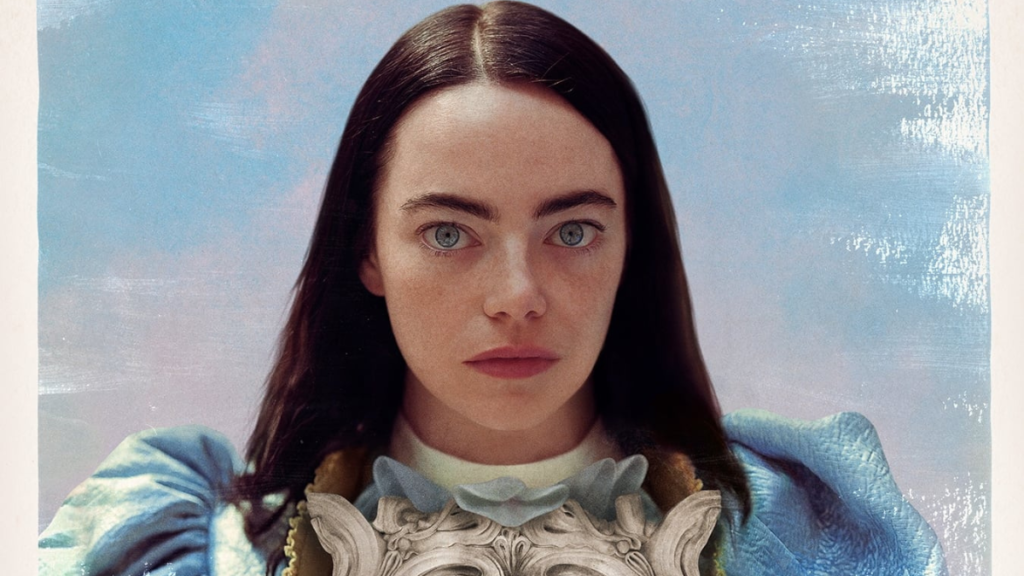
Alasdair Gray’s Poor Things is a dense, layered novel structured as a found manuscript with competing narrators, footnotes, and a deliberately unreliable frame that makes you question who’s actually telling the truth by the end. Yorgos Lanthimos’ film adaptation strips almost all of that structural trickery away and tells a much more direct, singular story of Bella Baxter’s journey.
That’s a real departure, and purists of the book have every right to miss the layered ambiguity of the original text; the film isn’t interested in making you doubt the story the way the book constantly does.
But taken on its own terms, the film finds something the book doesn’t quite reach in the same way: a purely visual sense of Bella’s growth, told through the way the world around her literally expands and gains color as her understanding of it deepens. It’s a different tool doing a similar job, where the book uses unreliable narration to make you question everything, and the film uses production design and color to let you feel Bella’s expanding world directly.
It’s not a faithful adaptation in the structural sense. It’s a confident reinterpretation that trades the book’s narrative games for its own cinematic ones, and mostly, that trade pays off.
Different, but good. Not the book’s structure, but a genuine reinterpretation rather than a flattening.